
Choosing a heavy-duty air filter is not only a matter of finding a similar shape or the lowest price. For trucks, construction machinery and heavy equipment, the buyer first has to confirm what filter is actually needed.
A useful RFQ starts with the filter identity: part number, OE number, cross reference, dimensions, application and photos. When these details are clear, the supplier can check the replacement more accurately and the buyer can reduce the risk of ordering the wrong filter.
Start with the application
Before comparing brands or prices, identify where the filter will be used. A truck air filter, excavator air filter and agricultural machinery air filter may look similar in a photo, but the sealing design, size and air-flow requirement can be different.
Useful application information includes the vehicle or machine brand, model, engine, working environment and whether the filter is a primary filter, safety filter or filter set.
Check the part number and OE number
The fastest way to identify an air filter is usually the part number printed on the existing filter, box, label or parts manual. If an OE number is available, keep it in the RFQ because it helps the supplier confirm the original application.
If you only have a replacement number, use it as a starting point, not the final proof. Cross reference data should be checked together with dimensions, application and product structure.
For more detail, see our filter cross reference guide.
Confirm whether it is a primary filter, safety filter or set
Many heavy-duty systems use both a primary air filter and a safety air filter. These parts are not interchangeable. The primary filter handles the main dust load, while the safety filter helps protect the engine during servicing or when the primary filter is damaged.
If the buyer orders only one part of a filter set by mistake, the shipment may not solve the maintenance need. When possible, confirm whether the machine uses a single filter, a primary/safety pair or a matched air filter set.
Read more in our guide: Primary vs Safety Air Filter.
Measure the filter when the number is unclear
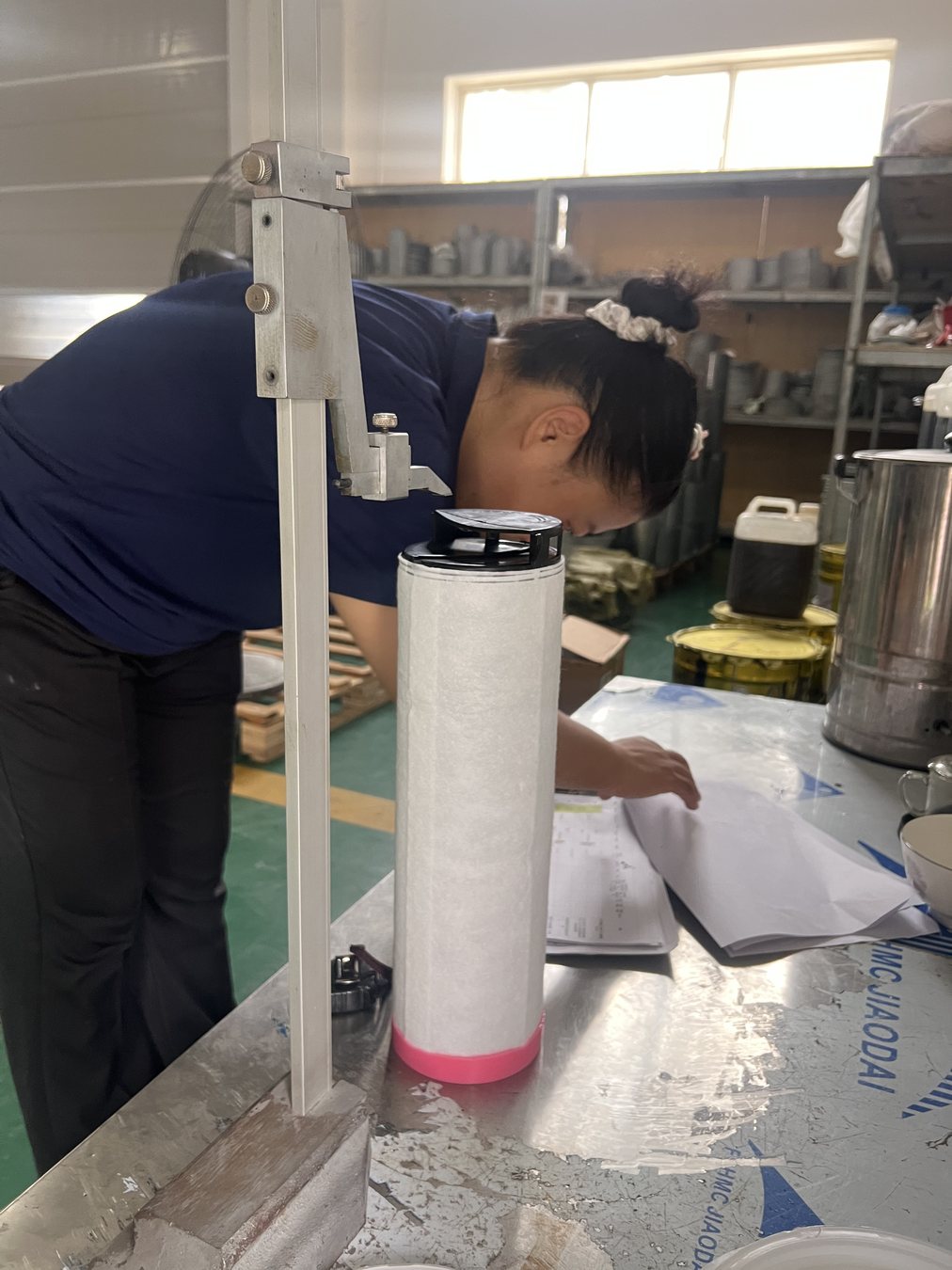
Sometimes the label is missing, damaged or different from the number in the manual. In that case, dimensions become important. For heavy-duty air filter replacement, buyers should normally record the outer diameter, inner diameter, height, gasket or sealing type and any special flange or closed-end structure.
Photos are also helpful, especially clear images of the label, top, bottom, side view and sealing area. Dimensions should not be guessed from a photo alone.
For a measurement checklist, use How to Measure an Air Filter for Replacement Orders.
Compare cross references carefully
A cross reference can help buyers search for equivalent replacement filters, but it is not a guarantee by itself. Different catalogues may list related numbers with different application ranges, supersessions or regional versions.
Before ordering, compare the part number, OE number, dimensions and application. If two filters are close but not identical, ask the supplier to confirm the risk instead of assuming they are interchangeable.
Match the filter to the working condition
Heavy-duty equipment often works in dust, heat, long service hours or remote maintenance conditions. A buyer may need a standard replacement, a longer service target, a complete set, or a filter suitable for a severe-duty environment.
The correct choice depends on the application and the result the buyer wants. Avoid vague requests such as "best quality" without explaining the machine, environment and service target.
What to send before requesting a quote
To help a supplier check the air filter correctly, prepare the following information before sending an RFQ:
- Part number, OE number or cross reference number.
- Vehicle, machine or engine application.
- Primary filter, safety filter or complete filter set requirement.
- Outer diameter, inner diameter, height and sealing details if available.
- Photos of the current filter, label, box or sample.
- Quantity, destination country and packing requirement.
You can search current references in Products, use Find Your Filter, or send the information through Request Quote. If the number is unclear, WhatsApp photos can help start the identification process.
Practical buyer checklist
| Check item | Why it matters |
|---|---|
| Part number / OE number | Gives the supplier the strongest starting point for filter identification. |
| Application | Confirms whether the filter fits the truck, machine or engine context. |
| Dimensions | Helps catch wrong cross references or similar-looking filters. |
| Primary or safety role | Prevents ordering the wrong part of a two-filter system. |
| Photos | Helps verify label, structure, sealing and product type. |
| Quantity and destination | Allows the supplier to check packing, quotation and export handling. |
FAQ
Can I choose a heavy-duty air filter only by size?
No. Dimensions are important, but buyers should also check the part number, OE number, filter role, sealing structure and application.
Is a cross reference enough to place an order?
A cross reference is useful, but it should be confirmed with dimensions, product structure and application before ordering.
What if I only have a filter photo?
A photo can start the identification process. Send photos of the label, top, bottom, side and sealing area, and add measurements if the part number is missing or unclear.
Next step
If you are checking a truck or construction machinery air filter, send the part number, OE number, cross reference, dimensions, photos, application and quantity. Jinguan can review the information and help match it to a suitable replacement filter from our supply range.
Request a quote or use Find Your Filter to start with the number you already have.