
Buying from a new supplier always requires trust. But for international industrial buyers, trust should be checked before money moves.
Recently, an overseas buyer told us about a sourcing loss of around USD 30,000. We also saw another case where a buyer paid a supplier, then the supplier disappeared, the website went offline, and public information was removed.
This article does not name the buyers or the suppliers. The point is not to attack Chinese suppliers. Most serious Chinese factories also want buyers to avoid fraud, impersonation and unclear transactions.
The practical rule is simple: verify first, pay second.
Verify the legal company
Before paying a new supplier, check whether the company identity is consistent across documents and communication.
Compare:
- Legal company name
- Registered address
- Website domain
- Company email domain
- Quotation or proforma invoice company name
- Beneficiary information on the payment account
A small spelling difference may be harmless, but a different company name or unrelated payment beneficiary should be treated as a warning sign until it is explained and independently confirmed.
Verify who you are communicating with
Supplier impersonation and email compromise are real risks in international trade.
If payment information suddenly changes, do not rely on the same email thread only. Confirm through another verified channel, such as a previously confirmed phone number, official website contact form, video call, or another known company email address.
Useful checks include:
- Is the email domain the same as the supplier's official domain?
- Does the person use the same company name as the quotation and invoice?
- Has the bank information changed suddenly?
- Can the supplier confirm the same information through a second channel?
Verify the factory
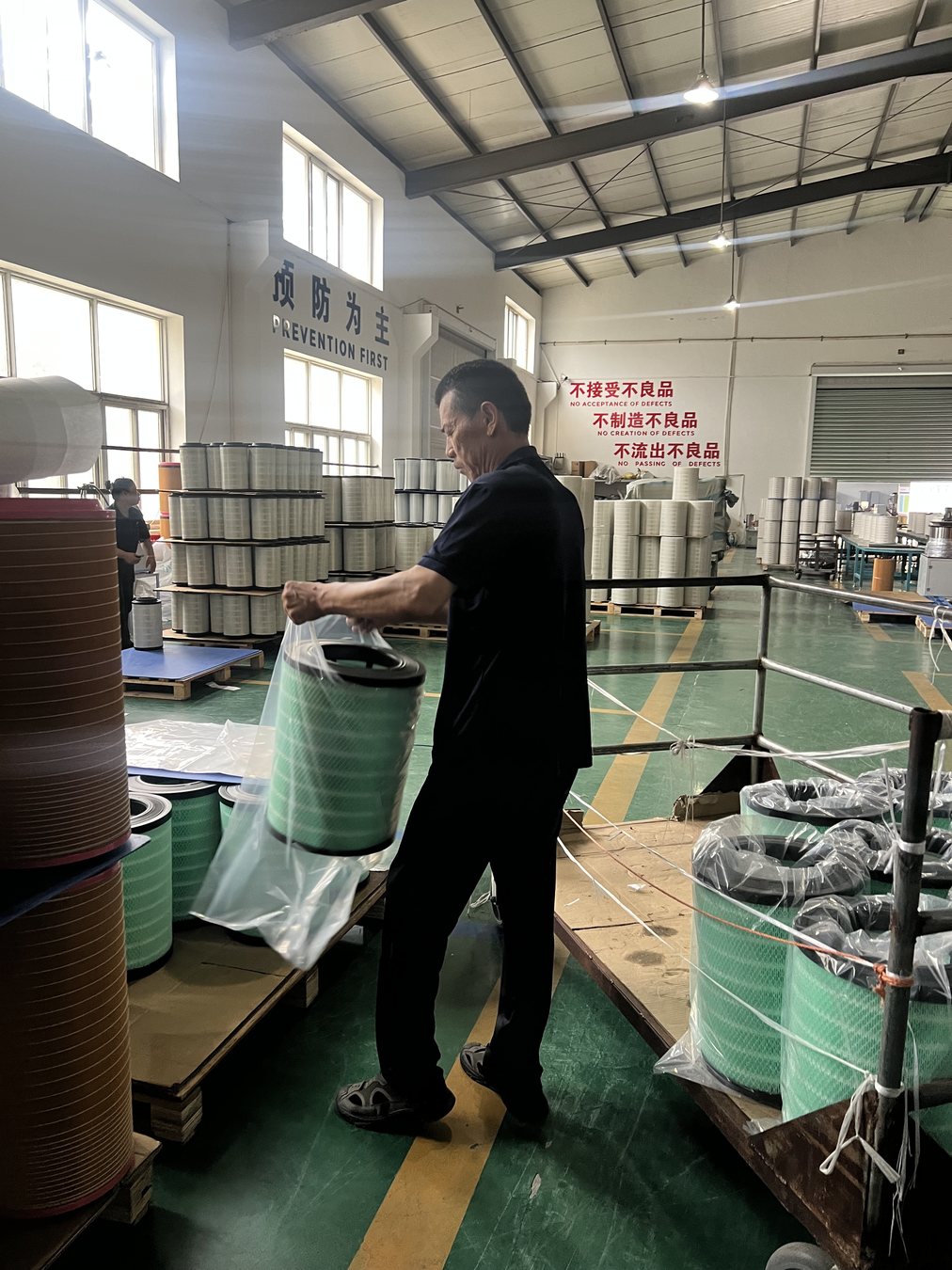
For first-time cooperation, especially for larger orders, buyers should confirm that the supplier has a real operating base and can support the product being offered.
Depending on order value and risk, this may include:
- Live video call from the factory or warehouse
- Factory photos that match the products being discussed
- Third-party factory verification
- Business registration or company verification services
- Shipment history or product documentation when appropriate
For industrial parts, a real factory or supplier should be able to discuss product details, packing, order preparation and communication steps clearly.
Confirm exactly what is being ordered
Many sourcing problems begin before payment, because the product was never confirmed clearly enough.
For replacement filters and other industrial parts, buyers should confirm the important details in writing:
- Part number
- OE number or reference number
- Product type
- Key dimensions when needed
- Quantity
- Packing and label requirements
- Application, vehicle, machine or engine details when available
- Product photos, label photos or sample photos
If a supplier cannot confirm what is being ordered, the buyer is not only facing a quality risk. The buyer may be paying for the wrong item.
Keep evidence before shipment
Before shipment, buyers should keep enough evidence to connect the order, the product and the shipment.
Depending on the order, useful records may include:
- Final product photos
- Packing photos
- Label or shipping mark photos
- Quantity confirmation
- Carton or pallet information
- Inspection records or third-party inspection report for significant orders
These records do not guarantee that no problem will happen, but they make the transaction easier to trace if a question appears after shipment.
Verify payment information
Payment information deserves separate checking.
Before sending money, confirm:
- Beneficiary name
- Bank account information
- Whether the beneficiary matches the supplier or agreed trading company
- Whether the payment details match the latest confirmed proforma invoice
- Whether any sudden account change has been verified through another channel
A sudden change of bank account, beneficiary, country, or payment instruction is a high-risk signal. Pause and verify before paying.
Before paying a supplier, also read our payment verification guide for bank-account-change and invoice-payment checks.
Start with a controlled trial order
When the product and order value allow it, a controlled trial order can reduce risk.
A trial order helps the buyer check:
- Product matching
- Communication speed
- Packing accuracy
- Document handling
- Lead time communication
- Problem response
The goal is not only to test the product. It is to test whether the supplier is reliable enough for larger cooperation.
Use independent verification for significant orders
For higher-value orders, buyers can add independent verification before payment or shipment.
Depending on the transaction, this may include:
- Third-party company verification
- Factory audit
- Pre-shipment inspection
- Trade platform protection when suitable
- Payment terms that match the risk level
The right method depends on the product, order value, supplier history and buyer's internal risk rules.
Trust, but verify
Good suppliers should not be afraid of reasonable verification. Serious buyers are not trying to make cooperation difficult. They are trying to avoid preventable risk.
Before working with a new supplier, remember four checks:
- Verify the company.
- Verify the product.
- Verify the payment.
- Verify the shipment.
If you are sourcing replacement filters for heavy duty trucks, construction machinery or heavy equipment, you can use our product catalog, Find Your Filter, Quality Control, Factory and Request Quote pages to check product information and send inquiry details.